Home › Electric Water Heater Repair
Electric repair · Sarasota, FL
Electric Water Heater Repair in Sarasota, FL
Most Sarasota homes heat water electrically — which means most no-hot-water mornings are an element, a thermostat or a breaker telling its story. These are the classic repair-first jobs.
Short answer: electric tank faults are usually one of four things — a burned-out heating element (lower first), a failed thermostat, a tripped high-limit reset, or a breaker problem. All four are diagnosable with a meter in one visit, and all four are genuine repairs on a tank that isn't leaking or past its years.
Know your two elements
A standard electric tank has two elements with two thermostats. The upper element heats the top of the tank first — if it dies, you get no hot water at all. The lower element maintains the bulk of the tank — if it dies, you get a short, disappointing supply: one shower, then the fade. That symptom split is the fastest diagnostic clue you'll ever give a provider.
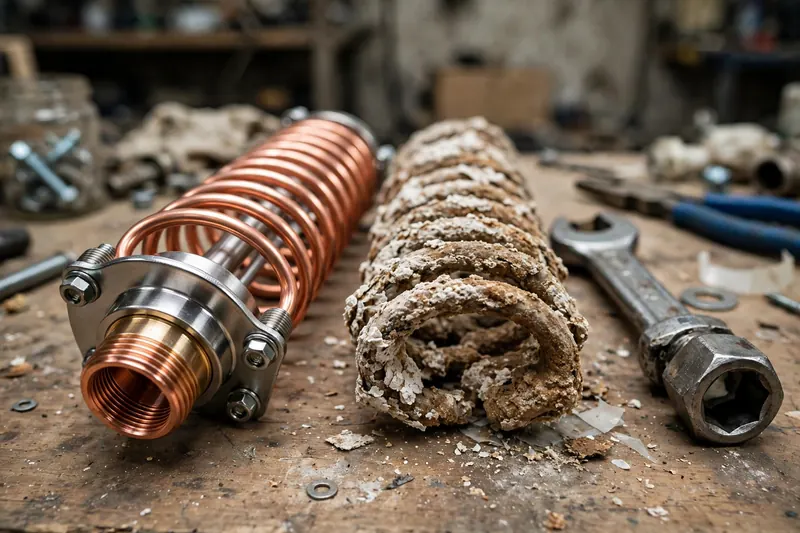
Why do they die young here? Sediment. Sarasota's delivered water still carries roughly 120–125 mg/L of hardness (county water quality report, 2024). Minerals settle on the tank floor, bury the lower element, and it overheats in its own blanket of scale until it burns out. Element replacement and a tank flush often travel together — fix the part, remove the cause.
Electric faults reward a proper diagnosis, because the same symptom — lukewarm water — covers three different parts at three different prices. When you call water heater pros in Sarasota, mention it’s an electric unit and what the breaker is doing; that one detail speeds up the whole visit.
Thermostats, resets and breakers
- Thermostat failure — water too hot, not hot enough, or temperature that wanders. Each element has its own; either can be replaced.
- High-limit reset — the red button behind the upper panel. One reset is a check; repeated trips are a diagnosis waiting to happen.
- Breaker trips — a shorted element is the usual suspect. Leave a repeatedly tripping breaker off and get it tested.
- No power at all — start at the panel: a dedicated double-pole breaker (typically 30A/240V) feeds the heater, and it's the first thing to check before assuming the worst.
What the repair visit looks like
Power isolated and tested, elements and thermostats metered, the failed part swapped, the tank checked for sediment and the anode rod eyeballed while it's open. You'll hear the quote before the toolbox opens — and if the tank's condition makes repair poor value (deep sediment, heavy corrosion, advanced age), you'll hear that too, with the replacement numbers beside it.
Gas heater instead?
Gas units fail differently — pilots, thermocouples, gas control valves and venting. Our no-hot-water checks cover the gas side, and the homepage symptom picker walks through "pilot won't stay lit." One number covers both fuels.
Talk it through first
Not sure this is your problem? Describe the symptom on a two-minute call — we'll point you to the right page or the right fix.
Call (941) 307-1429Questions, answered
Electric repair questions
Cold water is just the city supply — it doesn't pass through the heater. If cold runs everywhere and hot doesn't heat, the fault is inside the water heater system: a tripped breaker, a failed element or a dead thermostat are the usual three on an electric unit.
The lower element does most of the work and sits where sediment collects, so it usually fails first — and its classic symptom is running out of hot water much faster. Upper element failure typically means no hot water at all, because the top of the tank never heats.
You can press it once — it's the high-limit reset, behind the upper access panel. If it trips again, the heater is telling you the water overheated or an element is failing; repeated resetting needs a diagnosis, not a routine.
Elements and thermostats are the classic worthwhile repairs on a unit under 8 years old. If the tank itself leaks, or the unit is 10+ years old with compounding faults, replacement maths usually wins — see the repair-or-replace guide.
Treat it as a stop sign, not a nuisance. A breaker that trips repeatedly can mean a shorted element or failing wiring. Leave the breaker off and get it diagnosed — that's exactly the kind of fault a meter finds in minutes.
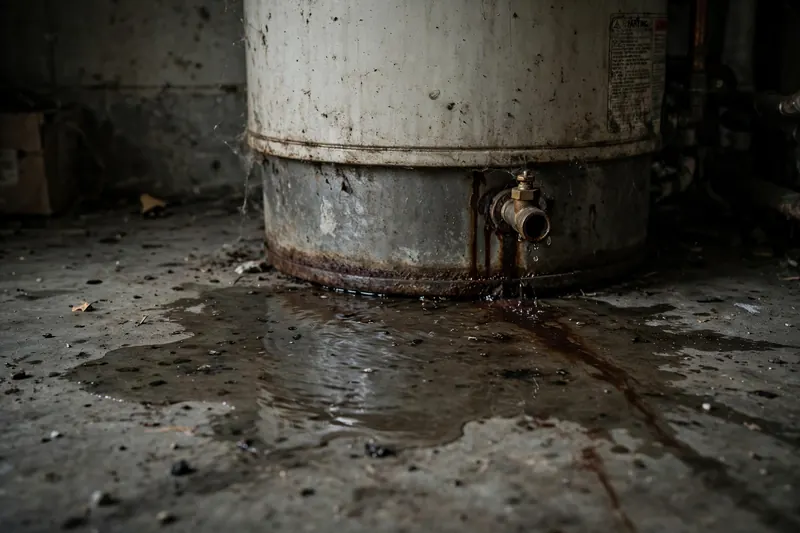
Water on the floor? No hot water at all?
Talk to a water heater pro now
One call describes the problem, confirms your area, and gets a local water heater pro on the job.
(941) 307-1429