Home › Water Heater Maintenance
Maintenance · Sarasota, FL
Water Heater Maintenance in Sarasota, FL
You can't set and forget a water heater in Sarasota — the county's own water report says why. An hour of maintenance a year is what stands between a tank that dies at seven and one that minds its business past ten.
Short answer: Sarasota maintenance means an annual drain-and-flush (sediment is the local killer), a T&P valve test, an anode rod check every few years, and — for tankless — an annual descale without exception. Sarasota County delivers water at ~120–125 mg/L hardness even after softening (2024 water quality report), so the minerals are always arriving; maintenance is how you send them back out.
What a Sarasota maintenance visit covers
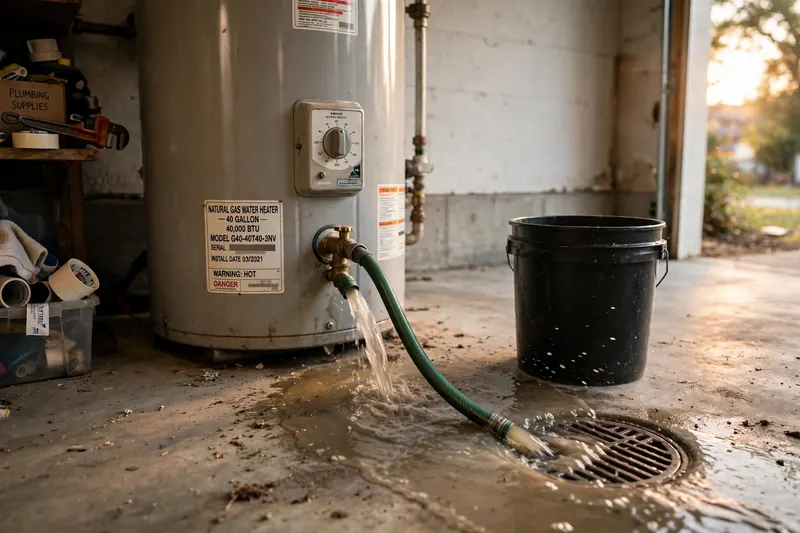
- Drain & flush — sediment out through the drain valve until the water runs clear
- T&P relief valve test — the safety valve you never want to test in anger
- Anode rod inspection — replaced if it's down to the wire core
- Element & thermostat check (electric) — the parts sediment kills first
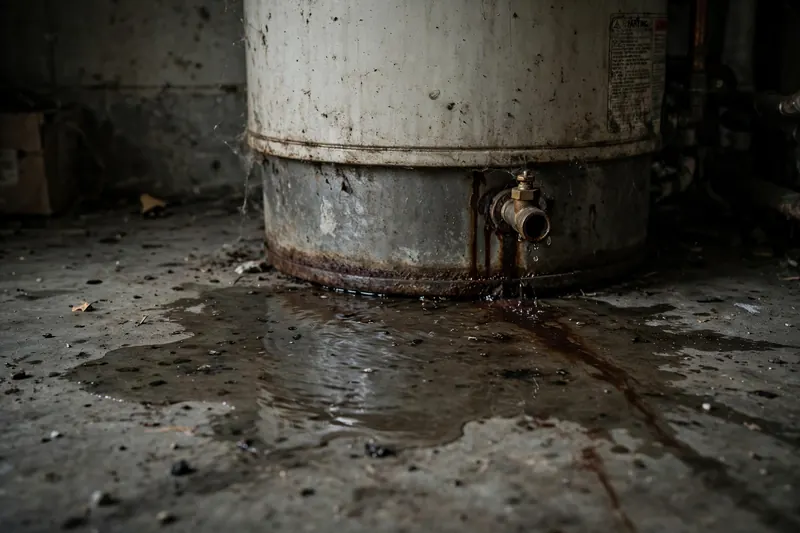
- Fittings, drain valve & pan check — the slow drips that become garage floods
- Temperature setting — 120°F is the usual recommendation: hot enough, safe enough
- Tankless: descale + inlet filter — the annual ritual that keeps error codes away
Think of maintenance as the cheapest branch of water heater repair services in Sarasota: the flush that prevents the element failure, the rod that prevents the tank failure. If your unit is already rumbling or the water’s already rusty, start with a diagnosis and let maintenance be step two.
The sediment story, in one paragraph
Water arrives carrying calcium and magnesium. Heat makes them precipitate — that's the white crust on a failed element and the gritty layer on your tank floor. The layer insulates: the burner or element works harder, the tank bottom overheats, efficiency slides and the lining takes damage from the inside out. You hear it first, as rumbling and popping. A flush removes the layer while it's still loose enough to leave. (The full water science, and what it means for element life, is on our electric repair page.)
Snowbird shutdown & restart
Sarasota's part-year rhythm is hard on idle heaters: water sits, sediment settles and compacts, and a leak that starts in July can run until October. Leaving for the season: cut power at the breaker (or use vacation mode on a hybrid), consider shutting the cold supply, and drain if your setup and absence justify it. Coming home: run a hot tap until air clears, confirm the tank is full, then restore power — an electric element fired in a dry tank dies in seconds. Our shutdown/restart visit handles all of it, plus a first-week leak check.
DIY or done-for-you?
Flushing is a legitimate DIY job for a confident homeowner — hose, bucket, breaker discipline, and care around hot water. The parts people skip are exactly the valuable ones, though: the anode rod needs the right socket and overhead clearance (condo lowboys may not have it), and the relief valve test tells you something only if you know what a bad one feels like. Many Sarasota owners split it: DIY flush in year one, professional visit with rod check the next.
Talk it through first
Not sure this is your problem? Describe the symptom on a two-minute call — we'll point you to the right page or the right fix.
Call (941) 307-1429Questions, answered
Maintenance questions
Once a year is the standard advice, and Sarasota is the place to take it seriously: the county's water quality report puts delivered hardness around 120–125 mg/L even after softening, and that's the mineral that becomes sediment. Heavy-use homes and tankless units benefit from keeping to the annual rhythm without exception.
Draining and flushing the tank, testing the T&P relief valve, inspecting the anode rod, checking elements and thermostats on electric units, examining fittings and the drain valve for early leaks, and confirming temperature settings. Tankless visits centre on the descale flush and inlet filter.
It's a sacrificial rod inside the tank that corrodes so the tank doesn't have to. In mineral water it gets consumed faster. Checking it every few years and replacing a spent one is the cheapest tank-life insurance there is — a rod costs little; a tank costs a lot.
At minimum: set a hybrid unit to vacation mode if it has one, or turn an electric unit off at the breaker / set a standard tank to its lowest setting, and shut the cold supply if you'll be gone for months. On return, open a hot tap and let it run before restoring full power to an electric tank — heating an empty or air-locked tank damages elements. Many part-year residents have us do a shutdown and restart visit; it's a small job that prevents a flooded garage discovery in October.
Sediment is the main killer of Florida tanks — it overheats the bottom, cooks elements and rots the lining from inside. Removing it annually and keeping the anode rod alive are the two things that measurably slow that down. Maintenance can't resurrect a dying tank, which is why an honest visit includes a straight opinion on the unit's remaining life.
Water on the floor? No hot water at all?
Talk to a water heater pro now
One call describes the problem, confirms your area, and gets a local water heater pro on the job.
(941) 307-1429